

If you have diabetes, a yearly dilated eye exam is one of the most important appointments on your calendar — and November is Diabetic Eye Disease Awareness Month, a good reminder to get it booked. Diabetes can damage the eyes for years before you notice any change in your vision. A dilated eye exam can catch it early, when treatment works best.
High blood sugar can damage the tiny blood vessels in the retina, the light-sensing layer at the back of the eye. This is called diabetic retinopathy, and it's a leading cause of vision loss in working-age adults. Diabetes also raises the risk of diabetic macular edema (swelling in the center of the retina), cataracts, and glaucoma.
The tricky part: early diabetic eye disease usually has no symptoms. Your vision can feel perfectly normal while changes are already happening.
Your eye doctor may want to see you more often if any changes are found.
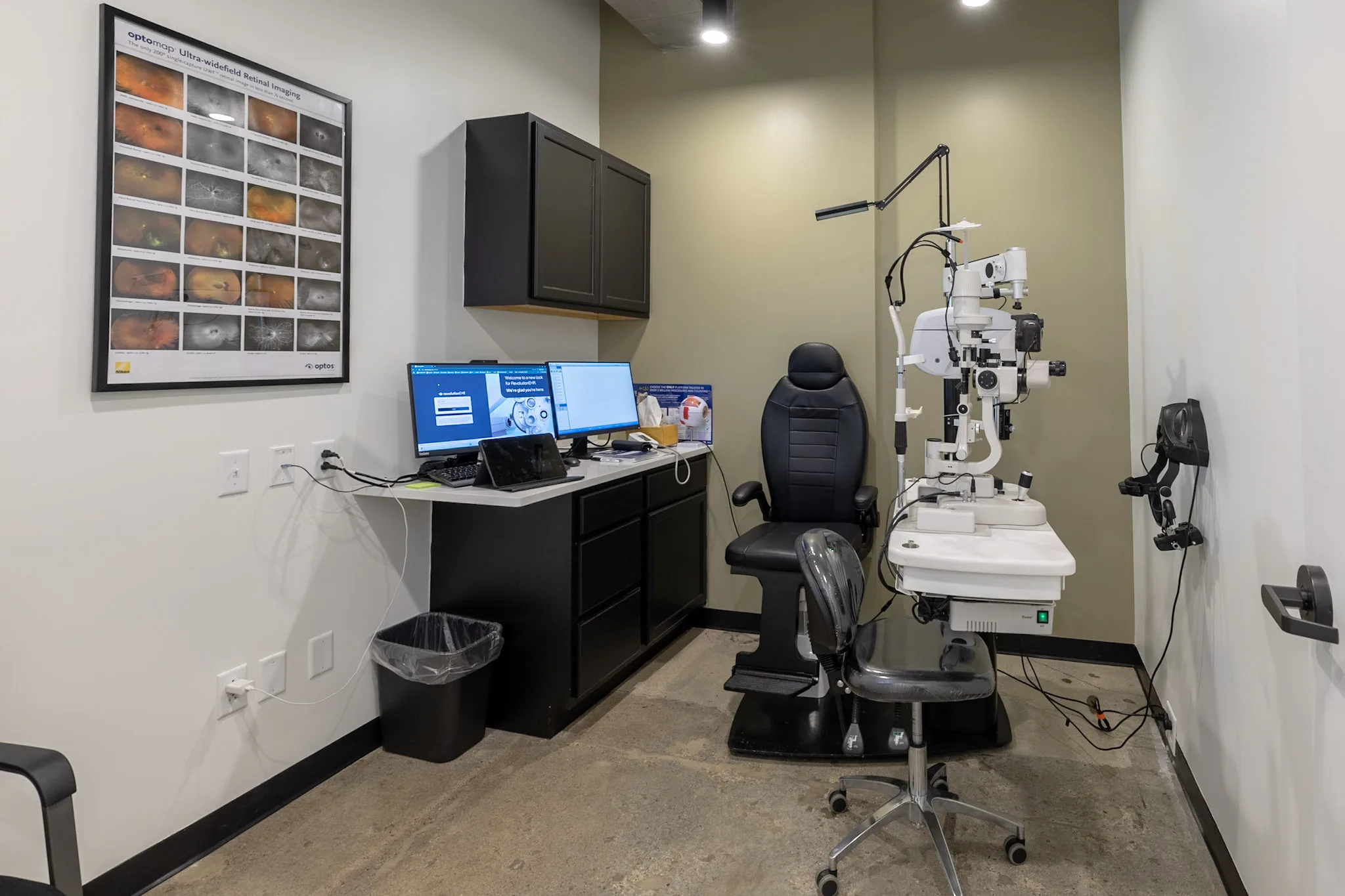
At Elite Eyecare Nashville, Dr. Nathan Lipe checks your vision, eye pressure, and the front of the eye. We take Optomap ultra-widefield retinal photos with our Optos Daytona, which captures a wide view of the retina in one image and gives us a baseline to compare year to year. Dr. Lipe also uses dilating drops to get a full, close-up look at the retina and blood vessels. Dilation makes your eyes light-sensitive and up-close vision blurry for a few hours, so bring sunglasses and plan accordingly. When needed, we can also send a report to your primary care doctor or endocrinologist so your care team stays on the same page.
A diabetic eye exam is a medical exam, so it's usually billed to your medical insurance rather than your vision plan. We accept many major medical plans, including Medicare. Check our insurance page or call us and we'll help you sort out your coverage.
If it's been more than a year since your last dilated exam, now is a good time. Book online or call Elite Eyecare Nashville at (615) 249-4926. You can learn more about our eye exams here.
At least once a year, with dilation. Your eye doctor may recommend more often if changes are found.
Yes. Early diabetic retinopathy usually has no symptoms, which is why yearly exams matter.
In most cases, yes — a diabetic eye exam is billed to medical insurance. Coverage depends on your plan.
Many people do, but your eyes will be light-sensitive and near vision may be blurry for a few hours. Bring sunglasses, and bring a driver if you're not comfortable.